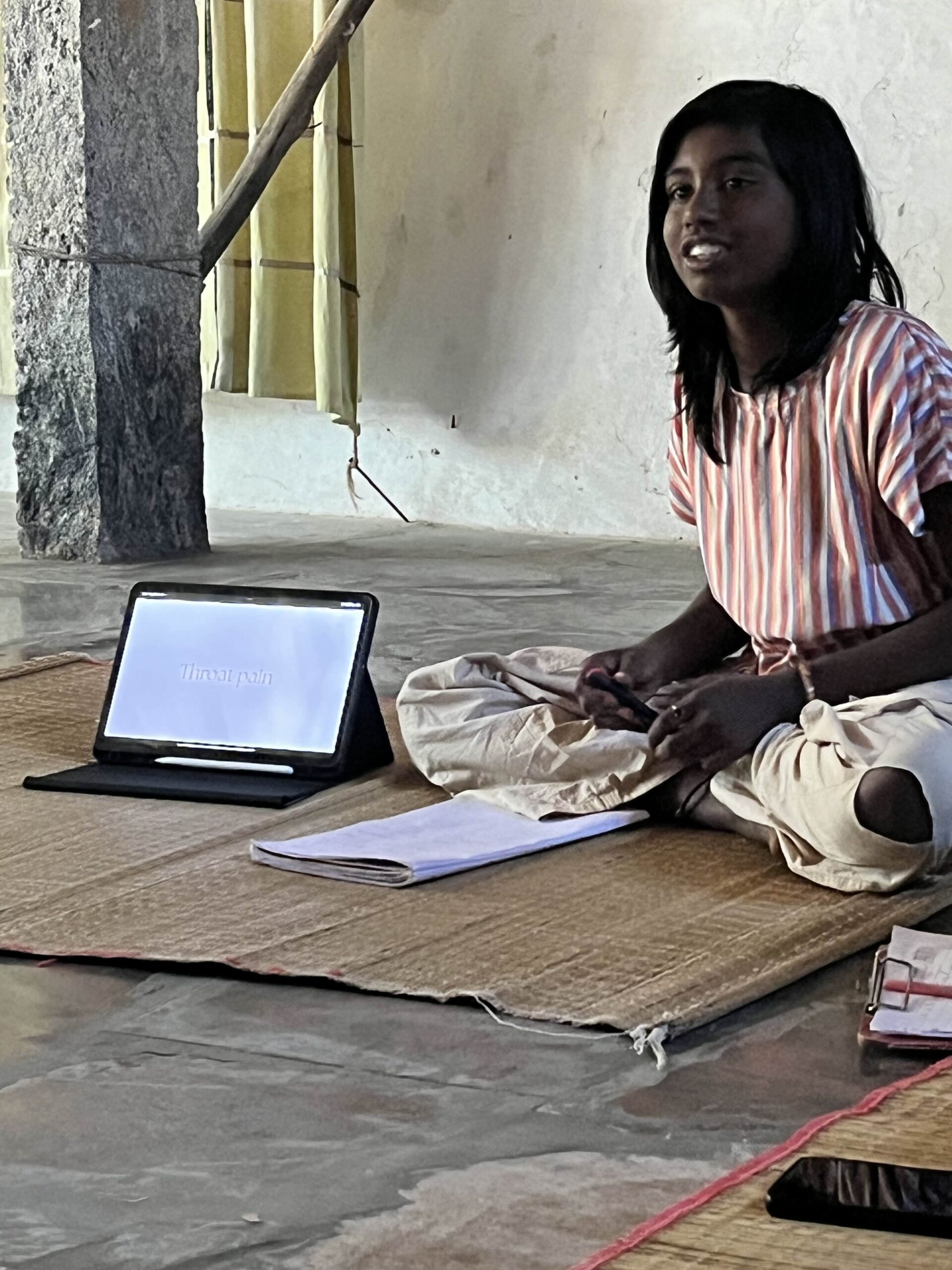
We often think of “research” as something for scientists in labs, but for a child at Aarohi, research is just another word for “I have a question.” Too often, we treat learning like a package delivered by a teacher or a syllabus. We act as if it’s something done to a child. But true learning is an act of building.
when curiosity leads the way
Take “Throat Pain.” This wasn’t a chapter in a textbook; for Prahati, it was a personal discomfort or a curiosity about her own body. Why does it hurt? What can I do? No teacher assigned this. No textbook told her to look it up. There was just a real need—a sore throat or a wonder about why we get sick—and a desire to solve it.
When we provide the “Needs” through a syllabus, we accidentally kill the curiosity. But when we let the child find the need, they always find the way. We are so obsessed with children following a path that we forget they are perfectly capable of building their own.
Research isn’t just about collecting facts; it’s about finding the language to describe our world. When a child researches their own pain, they become the author of their own body’s story. It makes me wonder:
- Are we raising children to be “Users” of information or “authors of knowledge”
- Are we raising them to “ask for permission” to know something, or “to own their curiosity”?
The power of doing
Why is Prahati researching “throat pain” for herself ten times more powerful than reading a chapter on the “Respiratory System”? Because a textbook gives you someone else’s answers to questions you never even asked.
When you research your own discomfort, every fact you find is a tool you can actually use. You aren’t just memorizing names of organs; you are figuring out how your body works. This kind of “doing” turns information into lived experience. It’s the difference between looking at a map of a forest and actually walking through the trees yourself.
the cementing of knowledge
Then comes the final step: standing up to share. We often think of presenting as just “showing off,” but it’s actually the moment the learning stays for good. When Prahati explains what she found to a group, her brain has to work differently. She has to organize the mess of information into a clear story.
In trying to teach us, she is actually teaching herself. By the time she finishes answering our questions, that knowledge isn’t just in her notes anymore—it’s a part of her.
the real text book
In the end, Prahati didn’t just learn about medicine or biology. She learned that she is capable of finding her own way. She learned that her questions have value and that she doesn’t need to wait for a teacher’s permission to own her own learning.
As parents, perhaps our biggest job isn’t to give our children the right books, but to give them the space to write their own.
Next time your child asks a “random” question, try not to give the answer right away. Instead, ask: “How do you think we can find that out?”
Here is another read to know how curiosity drives the learning