Listen to audio ☝🏼by Ratnesh or read the article below 👇🏼
This article, while relevant to all audience, is specially important for families doing child based education or home schooling or Unschooling.
Before we get into the exact three ways, there is a fundamental shift we need to make: we need to realize that reading and writing are not subjects. They are functional skills, and all children want to be functional in this world. They want to be able to see what is written on a hoarding or on a wrapper. They want to see what’s written on your device, understand a message, and send messages of their own.
If we understand this, then we realize that reading and writing are very functional. They do not need to be approached from the standpoint of teaching them or trying to get children to pass a test. If they have enough functional proficiency in reading and writing, they’ll pretty much be able to do anything they want to do in their life.
Once we look at reading and writing in this way, it really calms us down. It relaxes us because we are not trying to teach a subject, get marks, or pass exams. We are trying to live life.
When you think of it that way, you automatically see how effortlessly we have done it in Aarohi with child after child, and how reading and writing come so very naturally.
1. Read With Them (For Joy, Not ‘Gyan’)
The first and the most important thing to develop reading and writing effortlessly in children is to read with them. This doesn’t just mean reading books and stories from the point of view of giving them some gyan (knowledge) or getting them to read and write. Do it for the pure joy of reading.
- Share everyday moments: If I’m reading a joke on my phone, I will read it with the child on the phone, word by word, and enjoy it. I’m not reading it to teach reading; I’m reading it to enjoy the joke.
- Explore real-world text: If I open a chocolate wrapper, I will read what is written on the chocolate—what the ingredients are, what the cost is, where it was manufactured, and so on. Again, I’m reading here to find out about this chocolate because that’s what I like eating.
The first step is simply that we read more with children. We already read a lot in our daily lives, but we don’t really do it with the children, especially on the things that they like.
2. Leverage Their Personal Interests
The second way is to give them material that is directly related to their interests. When you do this, they will automatically read it, even if they don’t read it from beginning to end.
- Use real-world materials: If a child is interested in cars, I will give him pamphlets of cars. I’ll go to shops and collect pamphlets, or I will show him websites of cars where he can read about them. I can get him books about bikes, how bikes are made, or how bikes function.
- Turn on Same-Language Subtitling (SLS): I can put up a video with English subtitling in it. The child is listening, seeing, and simultaneously seeing the text being written there. That is how the child relates different words. Same-language subtitling is amazing.
By tailoring the content to what they already love, we give children the exact stuff they need.
3. Read and Write Together About Thoughts and Feelings
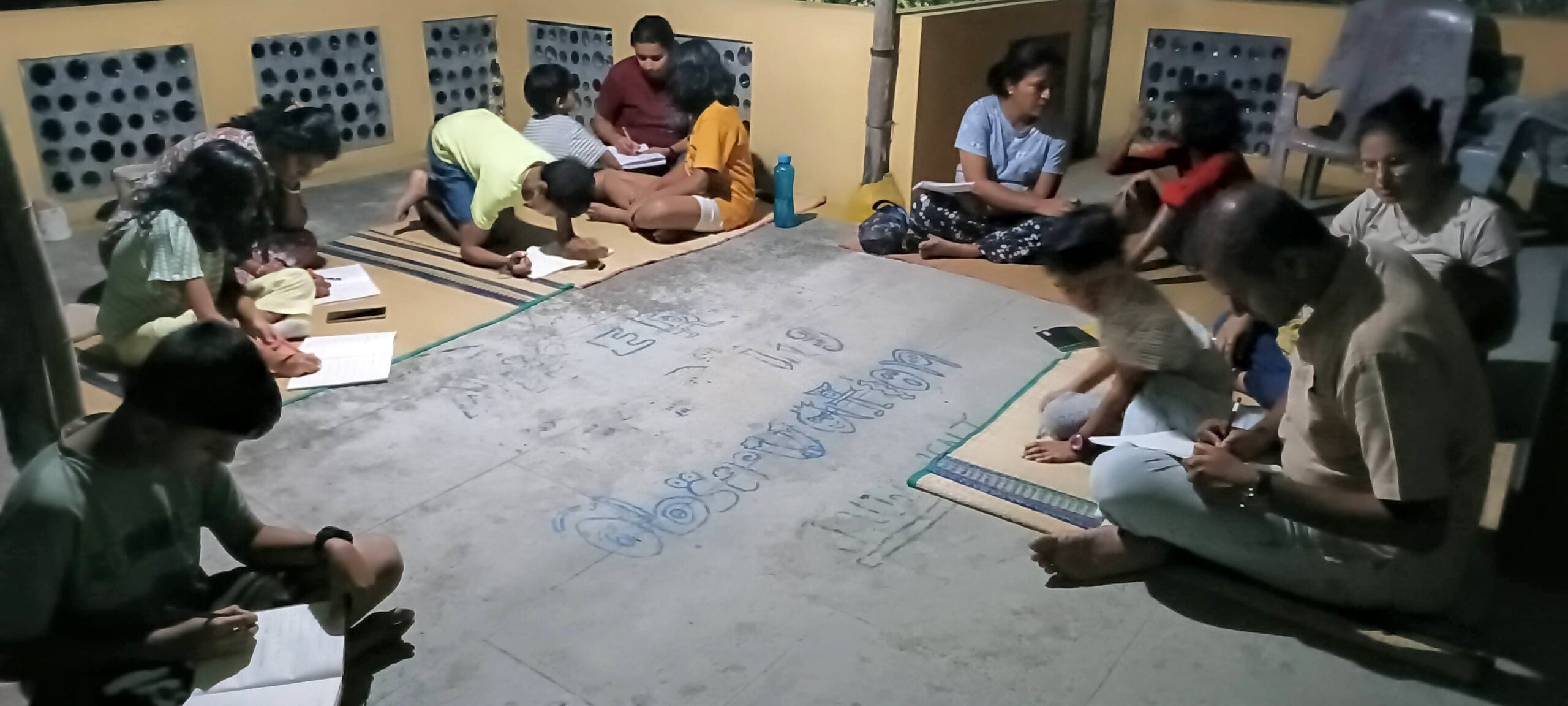
The third, and perhaps the most important way of all, is to actually read and write together about your thoughts and your feelings. Build it right into your daily practice.
Sit down together at the end of the day and write down what you are feeling. For example, you can pose a question for the day like: “How was my day?” or “Where did I feel frustrated today?”
- I will write down where I felt frustrated, and then I will pass it to my child.
- The child reads where I was frustrated, and in the same way, I read what the child has written.
What if they can’t write yet?
If the child does not feel like writing, or the child is not yet into writing, the child can draw and explain it to me.
Through this, the child realizes that the act of writing itself is not the ultimate goal; rather, it is what is written—the thoughts, his feelings, her feelings—that is far more important. If we do that on a daily basis, we are developing emotional intelligence, social development, and self-understanding. These are huge benefits, and at the same time, we are practicing reading and writing that is very core to how the child is thinking.
Bringing It All Together: An Example
To show how these three methods naturally combine around what the child is living at that moment, consider this example:
A child comes to me and says, “I want to buy this kind of a watch.” I say, “Okay.”
- First, we read together: We open a device and look at these watches on a website, reading about them together.
- Next, we explore interest-based material: I give him more material to read on the device, or look through any books or resources I might have on the subject.
- Finally, we write together: At night, or before we go shopping, we sit down and write a list of the characteristics we want to look for. If he is not into writing, he can draw, or I can act as the scribe for him so he sees the value of writing. I make notes on what to look for when we go to the market or browse an online store.
There is so much learning happening here, all completely driven by the child’s core desire to buy a watch.
By centering learning around real life and around the child development becomes entirely effortless.
This is how we work at Aarohi.
Whatsapp Ratnesh from Aarohi Life Education
if you have any question or comment.