Some parents ask
“ Are younger children really capable of planning their day?”
“ Shouldn’t we guide them towards certain things, especially studies, as they don’t take it up on their own?”
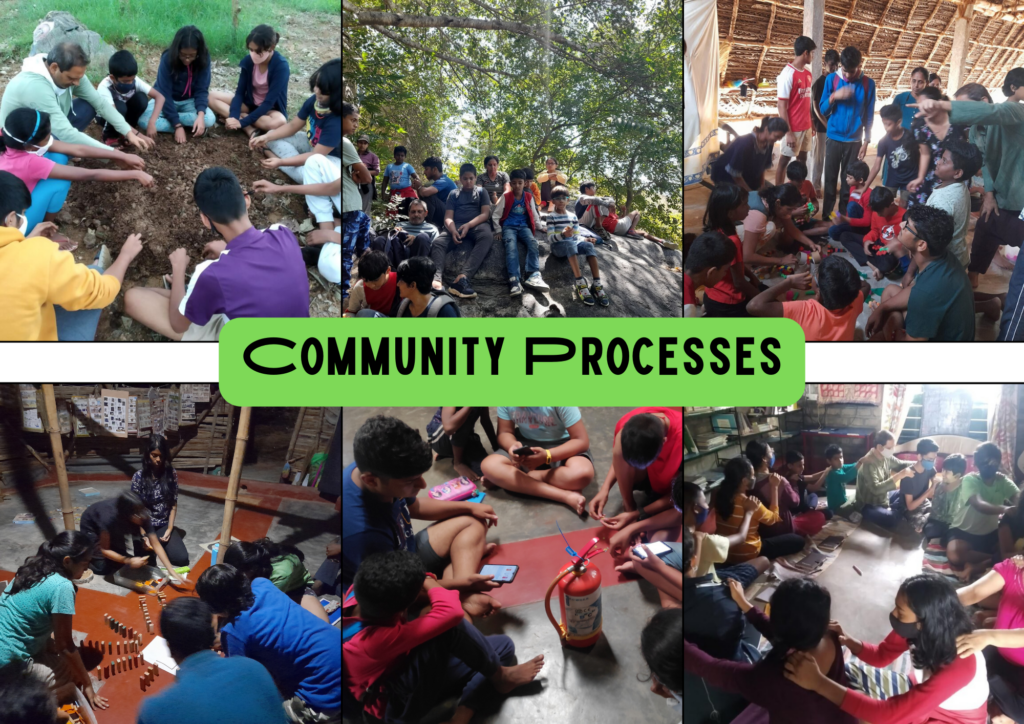
After five years of learning the Aarohi way- alongside my kids and many others in the community. My perspective on children’s capabilities has transformed.
As someone raised in the structured conventional system , I too believed children , especially the younger ones, needed to be taught, guided and told what to do. But as I immersed myself in Aarohi’s philosophy of self-directed learning, I began observing something powerful: every child learns in their own unique way.
Some observe, some explore, some experiment. And some do all of it, in ways we often miss when we come in with our definitions of “constructive learning.”
When adults insert themselves into a child’s learning process, we often do so with preconceived notions—this activity is “productive,” that one is “a waste of time.” But when we step back, we find children naturally drawn to what deeply interests them—whether it’s watching ants carry food, getting lost in imaginary worlds, or diving into books.
To us, “reading a book” may seem like proper learning, but “observing ants” may not.
This bias is deeply ingrained in us. We’ve been conditioned to value certain types of learning over others.
Once, I asked a group of children what they were doing or thinking while sitting quietly. Some said they were watching ants. Some got distracted. Most didn’t respond at all. As adults, our instinct is to conclude: “Nothing meaningful is happening here.”
But consider this:
A baby exposed to multiple languages for years suddenly says a meaningful word—aptly used in context. Did that happen out of nowhere? Of course not.
That child had been listening, observing, making connections between sounds and reactions, silently constructing meaning in their mind. A rich tapestry of learning was happening invisibly, long before the words emerged. And once speech begins, the vocabulary often grows rapidly—because the internal learning systems were always active.
So when a child is watching ants, do you really think they’re wasting time?
Their brain might be forming complex connections, creating memory pathways, processing patterns—much of which may be beyond verbal expression in that moment.
Their attention, their curiosity, their wonder—is learning.
And perhaps, we adults are the ones who need to relearn how to observe and absorb with that same openness.
At Aarohi, no activity is dismissed as a waste of time.
Every experience is considered a potential for learning.
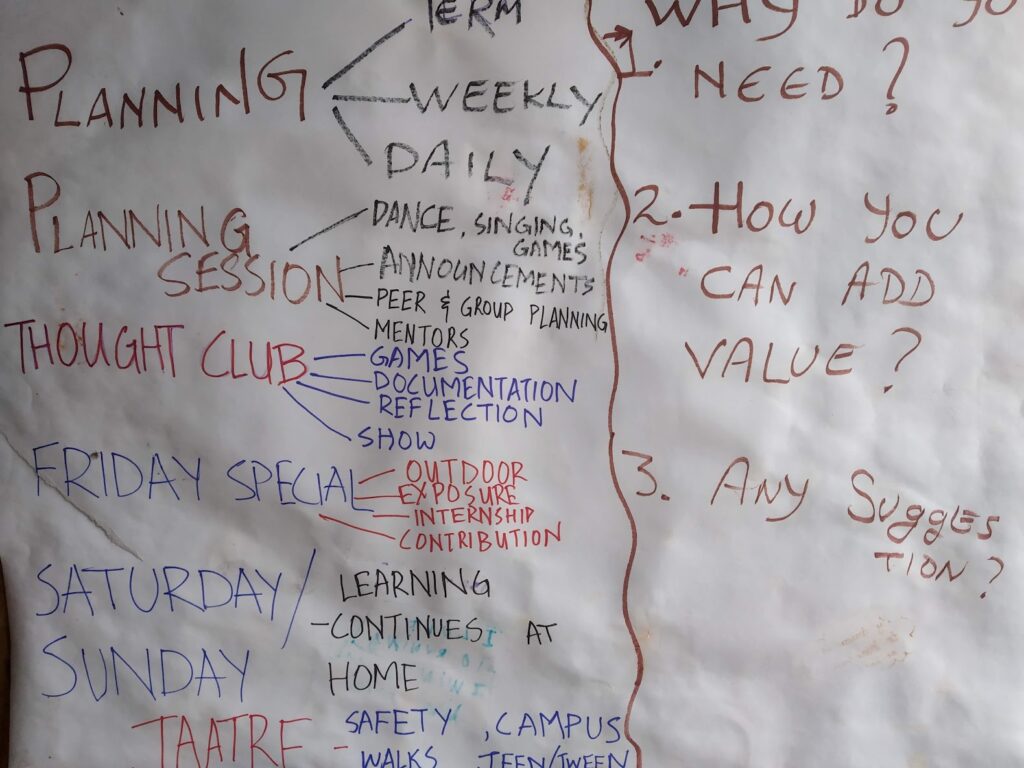
The structure thats encouraged is: plan your day. And learning follows.
You might wonder—“Plan to watch ants? Isn’t that silly?”
But what if we reframe “planning” as creating intention and focus?
Then, even observing ants becomes a deliberate, intentional act of learning.
When we plan our day by simply listing the activities we want to immerse ourselves in, we are creating a habit of intentionality. Over time, this daily practice of planning can train the brain to design not just a day—but an entire life—with purpose and clarity.So the question isn’t—“Can young children plan their day?”
The real question is—Can we trust their way of learning enough to allow it?
Because when learning is rooted in intention, even the smallest activity holds infinite possibility.
Check these blog posts too https://aarohilife.org/why-planning and https://aarohilife.org/planning-way-life-design-you-you