It all started with a deceptively simple question: “Can we make a raft that actually floats?”
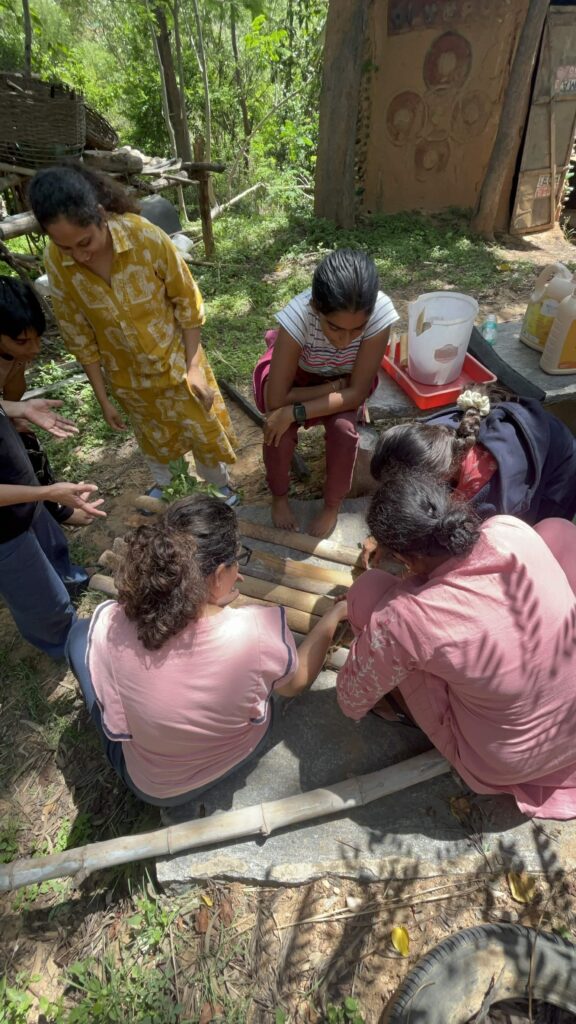
One question that transformed the entire campus into a construction site-meets-trading floor. There have been intense negotiations over plastic bottles, fierce debates about twine lengths, a few tears, a lot of trading, and an absolute riot of energy.
As home educators, we often feel the pressure to buy expensive curricula or plan elaborate, multi-subject lessons. But the Great Raft Challenge is a perfect example of how one single, hands-on action can unlock an entire ecosystem of organic learning. You don’t need a textbook when you have a bucket of hollow cans, some bamboo sticks, and a pond.
Here is how a single project naturally spirals into physics, math, engineering, social-emotional growth, and deep critical thinking.
The Physics of Floating: Moving Beyond Just “Density”
When kids start building, their first instinct is usually to look at the material itself. “Wood floats, rocks sink.” They think floating is entirely about density (how tightly packed a material’s molecules are).
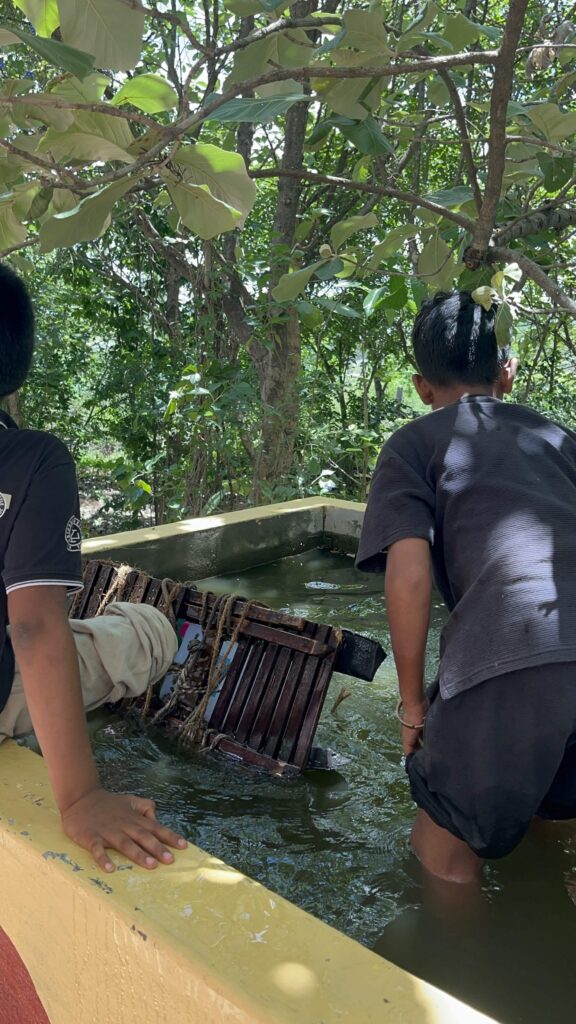
But then come the deeper questions that make their brains itch:
- If density is all that matters, how do massive steel cruise ships float?
- Why does a solid block of clay sink, but that exact same amount of clay shaped into a hollow bowl floats?
- Why does a tiny hollow tin can float, and why can a bigger can hold way more weight before sinking?
This is where the magic of buoyancy and Archimedes’ Principle comes alive without ever needing to open a physics book.
Archimedes’ Principle in Kid Terms: An object floats because it pushes water out of the way. If the weight of the water it displaces (pushes aside) is equal to or greater than the weight of the object itself, it floats!
When kids use hollow cans or empty plastic bottles, they aren’t just using “light” materials; they are capturing trapped air. The bigger the hollow can, the more space it occupies, which means it displaces a massive volume of water. Because that giant volume of water weighs much more than the lightweight, air-filled can, the upward buoyant force pushes it right back up to the surface.
Suddenly, your kids aren’t just playing with trash; they are calculating water displacement and engineering structural volume to maximize weight capacity.
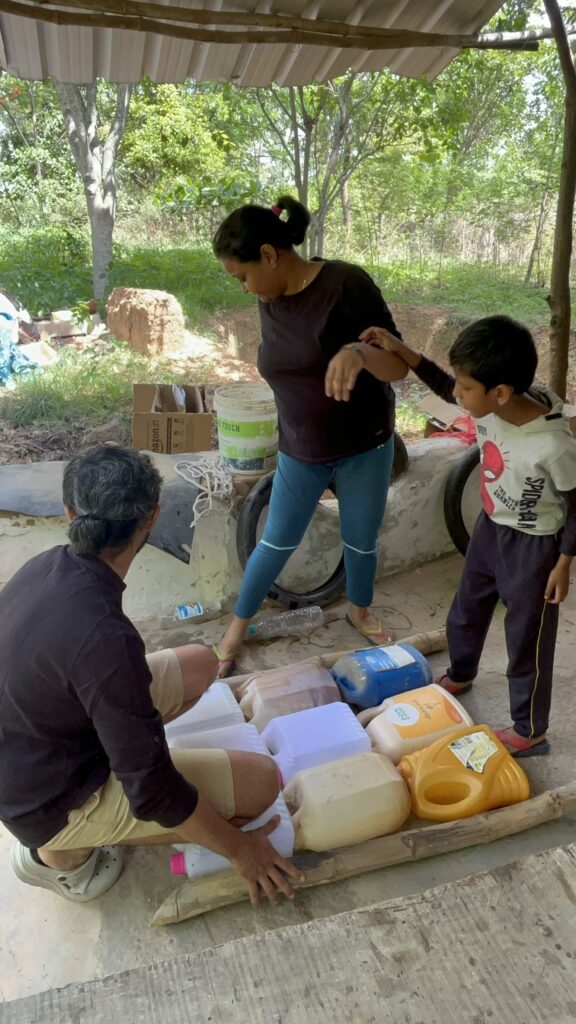
From One Action to Umpteen Activations
Unschooling thrives on the concept of “integration”—the idea that subjects don’t exist in isolated silos like they do in a traditional classroom. Look at how many learning vectors (activations) naturally exploded out of this one raft-making challenge:
1. Hands-On Mathematics & Engineering
- Weight Capacity Calculations: “How much weight do we want to put on it?” To answer this, kids have to estimate the weight of their cargo (or themselves) and figure out how many liters of air volume they need to support that mass.
- Load Distribution: They quickly realize that if all the weight sits on one side, the raft flips. They are learning center of mass and stability through trial and error.
- Ergonomics & Logistics: “How many people does it take to carry it to the pond?” This requires estimating dimensions, understanding structural integrity (will it snap when lifted?), and teamwork.
2. The Sandbox of Real-World Economics
When you limit the building materials, you inadvertently create a micro-economy. The backyard becomes a trading floor:
- Resource Scarcity & Bargaining: “I’ll trade you three large yogurt tubs for that roll of duct tape.”
- Value Assessment: Kids learn to evaluate quality over quantity. Is a sturdy PVC pipe worth four flimsy plastic water bottles?
3. Deep Social-Emotional Learning (The “Riot”)
Let’s be honest: when kids work together on a high-stakes project, it isn’t always peaceful. There is fighting, negotiating, and navigating creative differences.
- As unschooling parents, our instinct might be to step in and fix the fighting. But the conflict is the curriculum.
- When teams clash, they are practicing high-level communication, boundary-setting, consensus-building, and emotional regulation. Surviving a team “riot” and coming out of it with a finished raft is a massive victory for their developing brains.
Tomorrow Is Testing Day: Why Failure is the Best Part
Tomorrow, the rafts will meet the water. Some will float beautifully. Some will instantly tip over. Some might slowly disintegrate as the twine slips off the plastic bottles.
And all of those outcomes are a massive success.
In a traditional school setting, a sinking raft might mean a failing grade. In a homeschooling/unschooling environment, a sinking raft is just Data Point A. It is the ultimate invitation to iterate. If it sinks, the learning doesn’t stop—it actually accelerates. Why did it tilt? Which corner failed first? Did water get inside the hollow cans?
By stepping back and letting the riot happen—letting the trials, the trading, and the physics questions collide naturally—you are giving your children something far more valuable than a neat science lesson. You are giving them ownership over their curiosity.
So, pack the extra towels, bring some spare rope for on-the-spot adjustments, and embrace the beautiful chaos of tomorrow’s test. Your kids are rewriting what education looks like, one splash at a time.